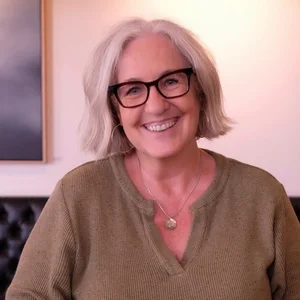
Entrepreneur Spotlight・Sarah B. Ottow

“One of my favorite rewards of being a business owner is connecting with other business owners from any industry and sharing our stories, our own rewards and challenges . This fuels me and makes me feel part of a bigger movement.”
Sarah and I first connected in 2020 when she booked an Ask Me Anything session with me. She is a passionate educator and the professional learning business she has built supporting teachers of multilingual learners is impressive. I love Sarah’s energy, professionalism and dedication to not only fostering good learning outcomes for multilingual learners that go beyond just the classroom, but also changing the field of education for the better. As a multilingual person myself I love everything about what she does. Thank you so much for sharing your story and for this awesome interview, Sarah!
Sarah B. Ottow・Director & Founder of Confianza
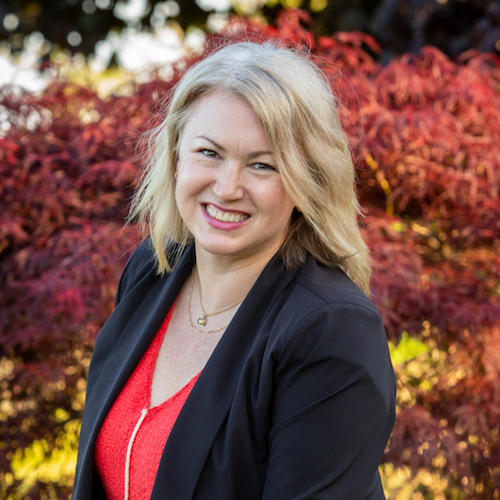
Sarah B. Ottow has over twenty years of experience in teaching, training, and coaching for multilingual learner success. As a professional development specialist, her work focuses on improving communication, collaboration and cultural understanding. Sarah enjoys working in public and private schools, non-profit organizations, as well as corporations across the US and internationally, teaching learners from pre-K to adults and working with students and families from over 40 different language groups. Sarah founded Confianza in 2015.
1) Tell us about your business
Confianza is a professional learning organization that I started in 2015 with the mission of building cultural understanding, communication, and collaboration between educators and multilingual learners. We offer online courses, seminars, tools, and consulting to help positively change the lives of educators, students, and families.
As a former teacher, instructional mentor, and teacher trainer in various graduate and undergraduate programs, I could see that schools and organizations needed a flexible partner to help reach, teach and support their students and families who are learning English as a second, third, or even fourth language! You see, English learners are the fastest growing group of students in US schools yet many educators are not adequately prepared to support these diverse students. It is not just the job of the ESL specialist teacher to make sure that multilingual learners and families feel included at school and can reach their potential. Additionally, in international schools, multilingual programs are prevalent and the same kinds of challenges can exist there.
At Confianza, we believe that diversity is to be celebrated and integrated to create more equitable, democratic schools that value and include all perspectives. The professional development topics that we offer range from family and student engagement, academic language instruction, teacher leadership, collaboration, data and assessments, equity-based practices, evaluation and coaching skills, and integrating social justice standards into curriculum. We offer direct-to-educator products and services plus we work directly with groups of educators through their school or district.
I am also the author of The Language Lens for Content Classrooms: A Guide for K-12 Teachers of Language Learners and that book is integrated into our professional learning offerings. Overall, I believe that many educators are in fact "change agents" that cannot only influence what is directly in their classroom or school, but expand their sphere of influence to other educators to ultimately help change the field of education for the better.
2) Has Covid changed the way you run your business?
When Covid first hit, my team of independent contractors and I stopped working completely. Schools were closed, the future was completely unknown, and, because my business model was highly face-to-face services, we were somewhat stuck. Confianza lost a ton of revenue and took advantage of the federal small business programs to help us stay afloat. However, my plan was to always be a primarily digital enterprise, yet, despite my best intentions in the pre-Covid environment, most schools wanted face-to-face interactions as opposed to synchronous sessions on Zoom or asynchronous courses. So then with Covid, I was able to start to pivot to the digital enterprise I always wanted to lead and scale, but that also meant I needed to let go of a large part of my consulting team.
Confianza has always offered a suite of continuing education asynchronous facilitated courses and those have had a small but steady revenue stream. Yet now, with remote services and products as the only option for the foreseeable future, I could offer Zoom workshop series and blended packages comprising a course plus Zoom workshops focused primarily on how to reach learners and collaborate with each other in digital and hybrid spaces as most schools have become. Moreover, I could lead most of the work again which I prefer versus managing others which is not my skill set nor passion.
Subsequently, Confianza's portfolio has grown significantly, mostly because, without traveling and without managing a larger team, I can work more hours within a business day and reach more people across different geographical regions. Pre-Covid I was going on more than 20 business trips during the school year months and that ate up a lot of time and expenses that could be used elsewhere. So now I am exploring the very real reality of a digital enterprise and figuring out ways to keep more of this solopreneur model while reaching and helping many more schools and individual educators with less expense and effort. One example of a product that came out of this pivot and reimagining is our new membership options for teachers and leaders (and a special thank you to Kerstin for her support with that!).
3) What are the challenges and rewards?
Let me start with the rewards since I like to model a strength-based approach. The rewards of owning my own business have been immeasurable. I am naturally very autonomous, independent, and prefer to be my own boss, so owning my own business has been incredibly rewarding in that way. I also find the constant need for introspection and personal growth to be more than I ever expected in this role and this is a gift that keeps on giving, even if it's really difficult to look inward at times. One of my favorite rewards of being a business owner is connecting with other business owners from any industry and sharing our stories, our own rewards and challenges. This fuels me and makes me feel part of a bigger movement that I'm very grateful to be in.
The challenges vary from big to small. In the beginning, so much felt heartbreaking and scary. I put everything on the line to start this business, including my very meager savings account to buy a MacBook which seemed like a big splurge at the time. I still had student loans, a car loan and rented a small apartment where I also ran my new business. I had a gut feeling I was on the right track but it certainly took a couple years to really get the traction that I needed to be more sustaining. Thus, threadbare living, networking at any opportunity, and hustling day in and day out was very real and basically all I did.
My clients were and remain as my main investors. Although the education space rewards apps and other products with venture capitalist support, consultants and professional learning is typically not viewed as something that yields a return on investment, much to my dismay. The ups were very high and the lows were very low, and I learned firsthand that other organizations and individuals would take advantage of me, especially since I was often the only woman in the room of a business negotiation, and a green businesswoman at that.
A couple years ago Confianza was nominated for Small, Woman-Owned Enterprise of the Year in Massachusetts, where I founded the business (now I live in Rhode Island). That event seemed to really reflect the growth and traction that had been happening and I started to trust in the process more. Since those first few years, the success has been humbling and the growth has been inspiring. What I have learned about myself so far is that my intuition, paired with my incredible network of knowledgeable mentors, helpful consultants, giving parents, and my supportive partner can bring me through anything. I have also learned that a good idea does not a good business make. One must have the capacity, the drive and the time to learn at a very quick pace and a very steep learning curve, the many, many facets of owning and running a business. As I like to say, the idea is half of it, the other half is business sense and operations.
4) What does your self-care look like these days?
These days, because I'm not traveling almost every day whether it be commuting to a school district or jumping on a plane or train, I am working at home full-time. I realize how fortunate I am to have seen growth in my business so I spend time cultivating the habit of gratitude, being grateful for what I do have, and making more space to take care of myself that I did not have before.
What does this self-care look like? It looks like getting enough sleep, preparing and eating nutritious meals, spending time with friends and family (mostly virtually!), and more recently, returning to my passion for art.
A big part of self-care is not overworking. Overworking is easy to do and it's partly how I got to this level, yet it doesn't serve me anymore. In fact, it takes away what I worked hard for--more time for me. I work hard not to check my email after hours, and if I do, I use the scheduling feature so as to not let my clients know that I have grey boundaries; in other words, I try to practice what I preach! Of note is that there are still many times I have to hustle again to rapidly develop a new product, respond to a big new client, or be visible at a conference for that next opportunity! If I don't do it, who will?
Working so closely with educators forces me to focus on my own self-care because that is a big topic of our coaching conversations these days. Teaching and leading in schools, especially urban schools, pre-Covid was challenging and now it's even more challenging than ever, although the research shows that re-skilling, building trust and taking care of oneself is now a priority in every industry. In my experience, because the lines between work and home have been blurred now more than ever, we can be more authentic in our professional life, we can share how our self-care looks with each other, and brainstorm ways to cope through this extremely challenging time. (Here is a blog I wrote on this topic that may be useful for folks in any field.)
5) Do you have any tips for other entrepreneurs during these uncertain times?
As hard as it can be, I think as entrepreneurs we need to put ourselves first, not the business. That's a fine line to ride because the business can also be our lifeline. To that end, I recommend two habits. First, get clear on your goals and start with the end in mind. I have to keep resetting my goals since they shift and change based on what's happening and what works or doesn't work. But getting that clarity is key. Second, setting up and sticking to focused work time that allows you to go deep and accomplish the tasks and the thinking necessary for reaching those goals is critical. I find that scheduling in this focused work time is essential, now more than ever, because it's very easy to get distracted and try to multitask and fall into a fear state or anxiety haze. That is a waste of time and certainly can be self-defeating for any entrepreneur. Being an entrepreneur is already somewhat self-defeating at times so we want to minimize the risk of hurting ourselves. We want to protect ourselves and set ourselves up for success as much as possible.
Take time to check in and breathe. We can get in our heads too much without bothering to see how things are feeling in the body. Practicing mind-body connection has really helped me stay calm, focused and in tune with my goals and the needs of those I serve.
Connect with other entrepreneurs, because it can be extremely helpful to put things in perspective. Even if they're in different industries, entrepreneurs tend to go through similar ups and downs and face similar challenges through a developmental lens. So reach out to others, find local small business groups, or Facebook groups, and read or listen to podcasts from other small business owners. Remember that you are not alone.
If possible, try to give back. Once you start reaching your revenue goals, I recommend giving even a tiny portion of your sales to mission-driven non-profit organizations. For example, Confianza gives a small monthly donation to Donors Choose, Two Screens for Teachers, Black Lives Matter, Playing for Change, and RAICES.